
Updated September 2026
The short answer: Net 30 terms for medical supplies let you pay a supplier's invoice 30 days after the invoice date, on that supplier's orders only. A practice card such as MedGrid Pay pays the supplier when you order and gives you 52-day net terms on purchases, with up to 120 days at 0% on product purchases by application. Which works better depends on how many suppliers you use, how quickly patient revenue comes in, and whether you pay balances in full.
This is a neutral explainer for independent practices, med spas and wellness clinics. It covers why supply timing matters for cash flow, how supplier terms and practice cards differ, and what to ask before you sign up for either.
Why supplies hit your cash flow first
Most practices pay for supplies before those supplies earn anything. You order stock, it ships, it sits on a shelf, and it's used on a patient days or weeks later. Only then does revenue come in: at checkout for cash-pay services, or later still when an insurer pays a claim. Every day between paying the supplier and collecting from the patient is a day the practice is financing its own inventory.
Payment terms narrow that gap. They don't lower what you pay; they change when cash leaves the practice. That matters most when you're opening, adding a service line, or buying in bulk to get a better price.
How net 30 terms work for medical supplies
- What it means: the full invoice is due 30 days after the invoice date.
- How you get it: suppliers that offer terms generally ask for a credit application, and may ask for trade references, financial statements or a personal guarantee.
- Where it applies: only to that supplier. Five suppliers can mean five credit applications, five due dates and five statements to reconcile.
- Early-payment discounts: some suppliers offer a discount for paying early. The invoice terms spell out the discount and the window.
- Paying late: depending on the supplier's terms, late payment can bring fees or an account hold.
Net terms work well when most of your spend goes to one or two suppliers that offer them, and you pay on time.
How a practice credit card with 52-day terms works
A practice credit card pays the supplier when you order. For the supplier, it's a paid order. For you, the time to pay comes from the card's terms, not the supplier's.
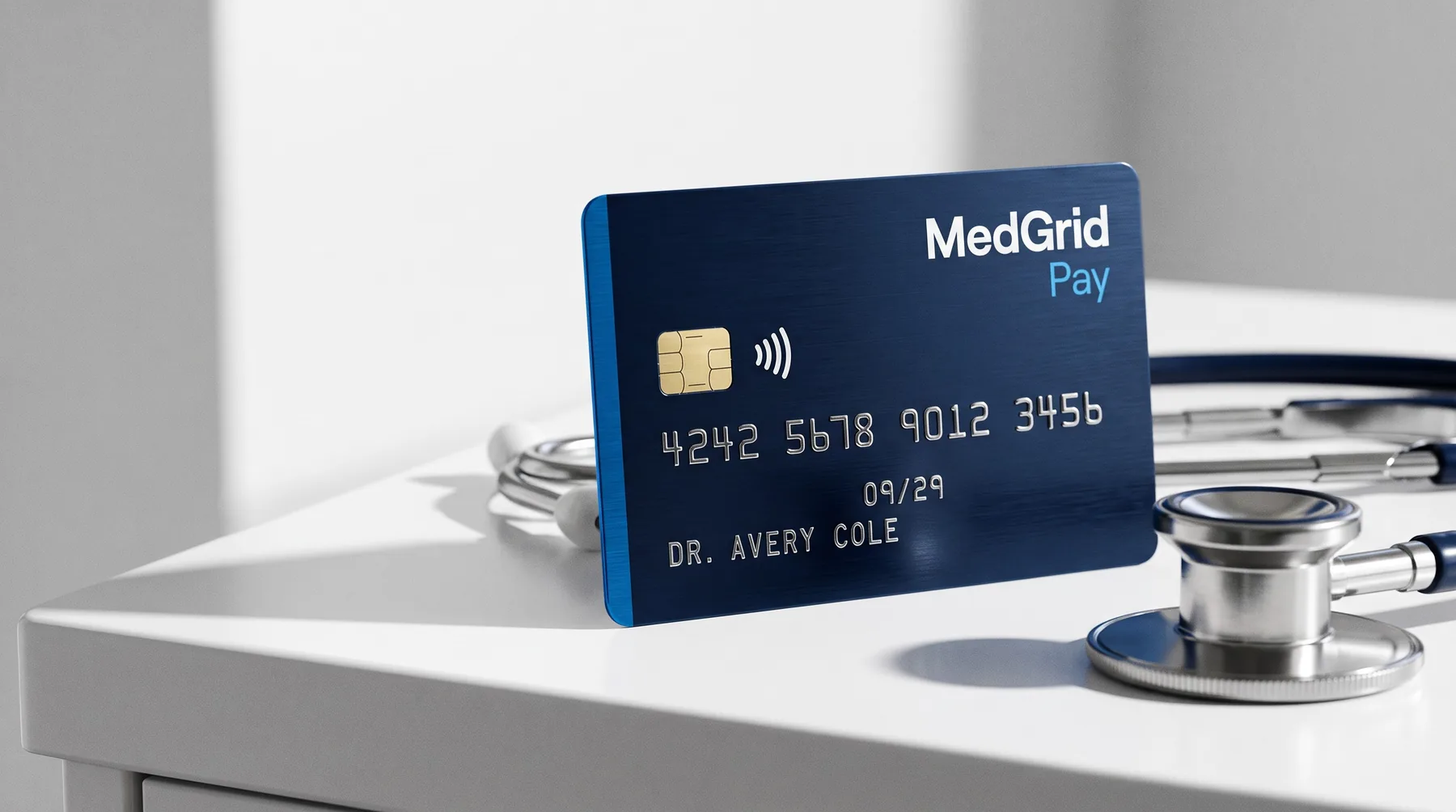
MedGrid Pay is a Visa® commercial card, powered by Nitra, with these published terms:
- 52-day net terms on purchases
- Up to 2.4% back on MedGrid orders
- Up to 120 days at 0% on product purchases by application
The MedGrid Pay card is a Visa® commercial credit card issued by Continental Bank, Member FDIC, pursuant to a license from Visa U.S.A. Inc.
On MedGrid, orders from every vendor share one cart, one login and one invoice trail, so supply spend is reconciled in one place whichever way you pay.
Net 30 vs a practice card: side by side
| Supplier net 30 terms | Practice card (MedGrid Pay) | |
|---|---|---|
| Time to pay | 30 days from the invoice date | 52-day net terms on purchases |
| Applies to | That supplier's invoices | Purchases on the card |
| Rewards | An early-payment discount, if the supplier offers one | Up to 2.4% back on MedGrid orders |
| Longer runway | Depends on the supplier | Up to 120 days at 0% on product purchases by application |
| Paperwork | A statement from each supplier | One card statement |
The MedGrid Pay card is a Visa® commercial credit card issued by Continental Bank, Member FDIC, pursuant to a license from Visa U.S.A. Inc.
Medical practice financing for inventory: the other options
- Business line of credit: draw what you need, repay it, and draw again. Interest generally applies to what you've drawn, which suits uneven or seasonal buying.
- Term loan: a lump sum repaid on a schedule. It fits a one-time build-out better than recurring supply orders.
- Equipment financing or leasing: tied to a specific device and often secured by it. It's relevant for lasers and other capital equipment rather than consumables.
- Paying up front: no borrowing cost, but it ties up working capital you may need for payroll or rent.
Rates, fees and eligibility vary by lender, so compare the total cost in writing, and talk to your accountant about what fits your practice.
Choosing a business card for a medical practice: what to ask
- What are the payment terms, and when is each statement due?
- What fees and interest apply if a balance is carried past the terms?
- Where do rewards apply, and how are they paid?
- Can staff have their own cards and limits, and who is liable for their spending?
- Is a personal guarantee required?
Read the card agreement itself. Credit extended primarily for business purposes is exempt from most of Regulation Z, the federal Truth in Lending rule (12 CFR 1026.3(a)), so some protections people associate with personal cards may not apply. According to the CFPB's official interpretation, two rules do reach every credit card, business cards included: the limits on issuing cards and on liability for unauthorized use (12 CFR 1026.12(a) and (b)). If an issuer provides 10 or more cards to an organization's employees, the issuer and the organization may agree to their own liability terms, but an employee's own liability still follows the rule.
Which fits your practice?
- Supplier net 30 fits when most of your spend goes to one or two suppliers that offer terms, and you pay on time.
- A practice card fits when you buy from several vendors, want one statement and rewards, and pay in full within the terms.
- Both can work together: terms with your main med-surg supplier, and a card for specialty orders.
Whatever you choose, pay within terms and decide who can spend. On MedGrid, staff sub-accounts come with an ordering switch, so you control who can place orders. MedGrid Pay is one of several services MedGrid offers practices, alongside the clinician marketplace itself.
This article is general information, not financial, tax or legal advice.
Frequently asked questions
What does net 30 mean for medical supplies?
Net 30 means the full invoice is due 30 days after the invoice date. It applies only to that supplier's orders, and suppliers that offer it generally ask for a credit application first.
Is a practice credit card better than net 30 terms?
It depends on how you buy. Net 30 suits practices that buy mostly from one or two suppliers that offer terms. A practice card suits practices buying from several vendors that want one statement and pay in full within the card's terms. Many practices can use both.
What are MedGrid Pay's terms?
MedGrid Pay is a Visa® commercial card, powered by Nitra, with 52-day net terms on purchases, up to 2.4% back on MedGrid orders, and up to 120 days at 0% on product purchases by application. The MedGrid Pay card is a Visa® commercial credit card issued by Continental Bank, Member FDIC, pursuant to a license from Visa U.S.A. Inc.
Do consumer credit card protections apply to a business card?
Not all of them. Credit extended primarily for business purposes is exempt from most of Regulation Z (12 CFR 1026.3(a)). The rules on issuing credit cards and on liability for unauthorized use (12 CFR 1026.12(a) and (b)) still apply to all credit cards, so read your card agreement closely.
How do I control staff spending on supplies?
Decide who can order and set limits before anyone buys. On MedGrid, staff sub-accounts come with an ordering switch. If a card issuer gives 10 or more cards to your employees, Regulation Z lets the issuer and your practice agree to their own liability terms, but an employee's own liability still follows the rule.
Sources
- Legal Information Institute (Cornell Law School), 12 CFR § 1026.3 — Exempt transactions (accessed September 23, 2026)
- Consumer Financial Protection Bureau, Regulation Z § 1026.3 — Exempt transactions, with official interpretation (accessed September 23, 2026)
- Consumer Financial Protection Bureau, Regulation Z § 1026.12 — Special credit card provisions (accessed September 23, 2026)
Compare the terms yourself: See MedGrid Pay's terms → Or verify your NPI to start ordering at wholesale pricing.